How to Prepare for Moving to Ghana – A Real Checklist
Ghana Without Filters · A practical, honest, no-nonsense guide for anyone planning to relocate
Most people who move to Ghana prepare for the dream, but not for the reality.
They pack clothes, sunscreen and excitement, and they forget the things that actually decide whether the move works:
- documents
- a money strategy
- health preparation
- cultural understanding
- emotional readiness
- realistic expectations
This checklist is not the influencer version. It is the preparation you really need, based on more than two decades of living in Ghana, not on a two-week holiday in December.
Search our Network. Start here.
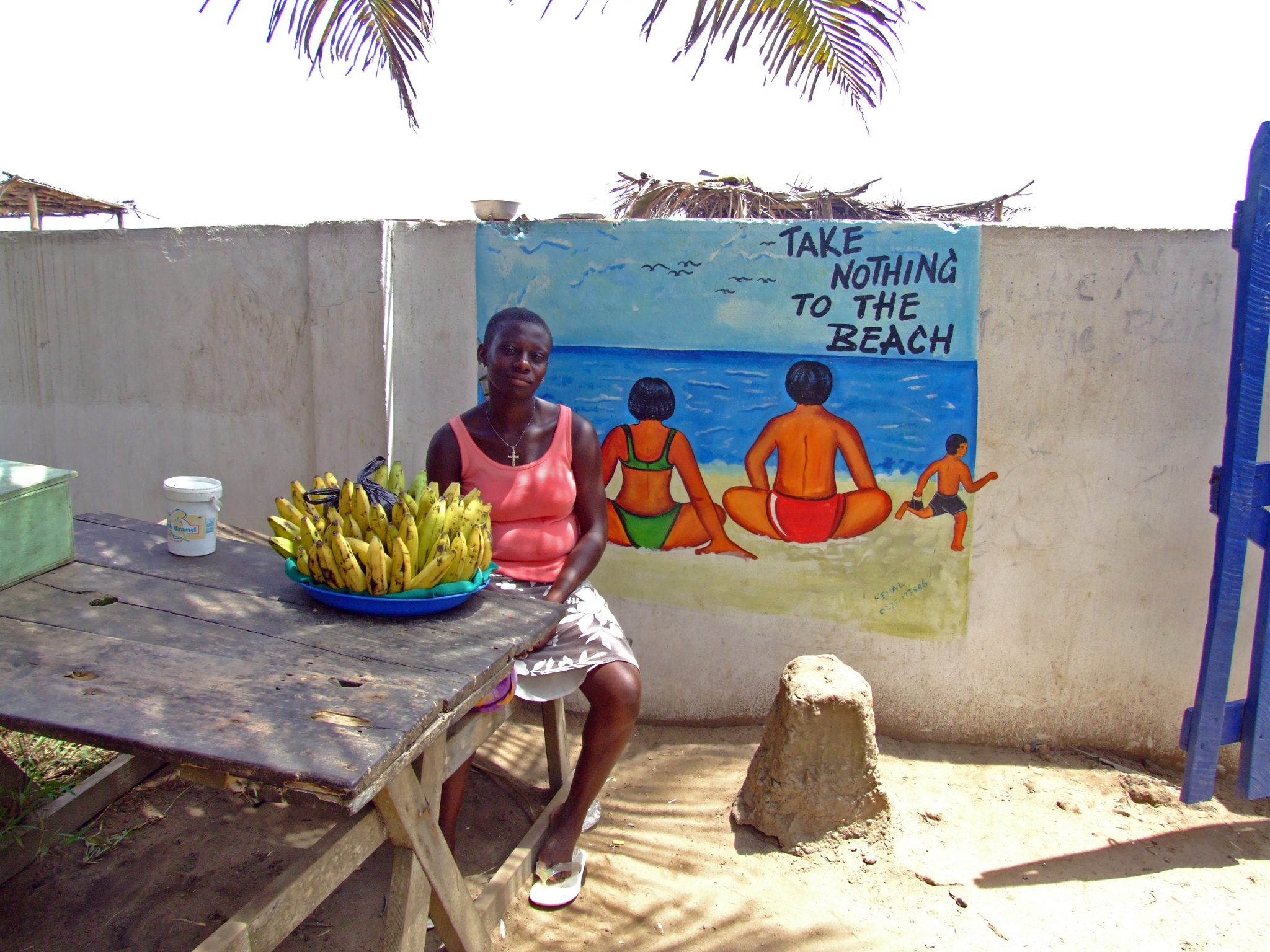
Selling bananas. That is her humble business, and how she makes a daily living. © Remo Kurka, Takoradi
1. Prepare your mindset first, not your suitcase
Before anything else, sit down and answer these honestly:
- Can I handle heat, noise, chaos and slow processes?
- Can I live without Western efficiency?
- Can I adapt to a different culture, even if I have Ghanaian roots?
- Can I accept that things will not go as planned?
- Can I handle loneliness, frustration and culture shock?
If the answer is "no", Ghana will be difficult. If the answer is "yes", you are already ahead of most returnees. And if you are not sure, read The Biggest Mistakes Returnees Make When Moving to Ghana before you book anything.
2. Documents you must have before you travel
Many returnees arrive unprepared and then lose months in offices. Ghana loves paperwork, and since May 2026 it also loves digital paperwork.
Entry: the 2026 rules
On 25 May 2026 Ghana ended visa-on-arrival and most visa-free entry and switched to a digital pre-travel system at the official portal, evisa.immigration.gov.gh:
- ECOWAS and AES citizens still enter visa-free with a valid passport
- other African Union nationals, and nationalities that used to be visa-exempt, need a free but compulsory Electronic Travel Authorisation (ETA) before they fly
- everyone else needs a paid e-Visa. A single-entry tourist or business visa is around US$260
- airlines check your authorisation at check-in, so no approval means no boarding
If you hold a Ghanaian passport, or dual citizenship, travel on it. If you have been granted Right of Abode, carry the proof. Beware of copycat visa sites: the ETA is free, so anyone charging you for one is not the government. Full details and fees are on our Ghana ETA and e-Visa page.
Staying longer: residence permit and Non-Citizen Ghana Card
Entry permission is not permission to live here. Foreign nationals who stay must apply to the Ghana Immigration Service for a residence permit. Once you have it, or once you have spent 90 days in Ghana in total, you also need the Non-Citizen Ghana Card from the National Identification Authority. Without that card you will struggle to open a bank account, renew your permit, register a car or keep your phone line, because foreign residents must register their SIM card with it. The NIA has quoted around US$120 for the first card, but check the current fee before you go.
The NIA asks for your passport, your residence permit and your birth certificate, certified or validated by your own country's embassy. Sort that birth certificate out before you leave home. It is far harder from Accra.
Bring with you
- a valid passport with at least six months remaining, and blank pages
- your ETA, e-Visa or residence permit, sorted before you fly. Don't rely on "I'll fix it there"
- a yellow fever vaccination certificate, which is mandatory for entry
- your other international vaccination records
- your birth certificate, certified for use abroad
- your marriage certificate, if you are married
- certified school, university and professional certificates if you plan to work
- copies of all of it, both printed and digital, stored somewhere outside your phone
- a stack of passport photos, because you will need them constantly
Optional, but extremely helpful
- a police clearance certificate from your home country, which is important for work permits and business
- an international driving permit
- notarised copies of important papers
Ghana loves paperwork. Bring everything, twice.
3. Money preparation, the part everyone underestimates
Ghana is expensive, and unpredictable. The cedi lost around 9.5% against the US dollar in the first nine months of 2026 alone. Plan for prices that move.
A. Savings
- at least three to six months of living expenses. Six or more is better
- much more if you plan to start a business, because the start-up phase is always longer than you think
- remember that rent is usually demanded one or two years in advance
B. Several bank cards
ATMs run empty or fail, cards get blocked by your home bank when they see a Ghana transaction, and networks go down. Carry at least two cards from different banks, and tell your banks you are moving.
C. A plan for international transfers
Moving money in and out of Ghana is slow and can be expensive, and limits apply. Compare costs before you move, using services such as Wise against your bank, and keep an account abroad open.
D. Mobile money
Much of daily life runs on MoMo, from paying the trotro mate's boss to the electricity token. To use it properly you need a registered SIM, and for a resident that means the Non-Citizen Ghana Card. Tourists get SIM cards with limited validity.
E. Emergency money
Keep cash hidden somewhere safe, ideally in pounds or euros. You will need it one day: for a hospital, a lawyer or a flight out.
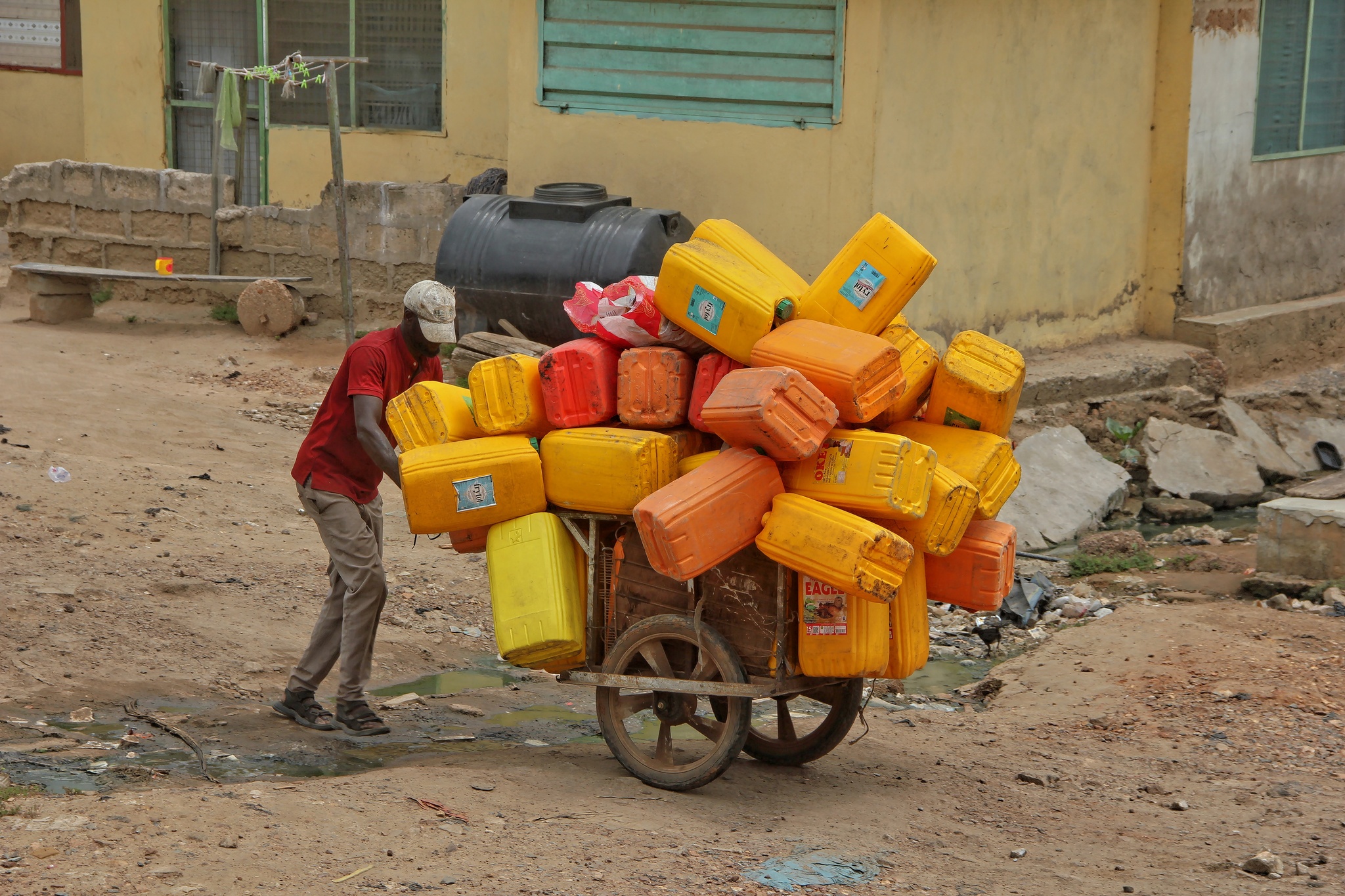
Yellow containers for fetching and storing water when the taps run dry. This is still the 2026 reality in much of Greater Accra. © Remo Kurka
4. Health preparation, don't ignore this
Ghana's healthcare is not like Europe's or the US's. Good private clinics exist in the cities, but they cost money. Outside the big towns, emergency care can be hours away.
Prepare
- travel insurance for the first months
- private health insurance with medical evacuation cover if you stay long-term
- a supply of your regular medication, plus basics such as painkillers and allergy tablets. Ask your doctor what else to carry
- mosquito repellent and a net
- a malaria plan, agreed with a travel-medicine doctor. Malaria is the illness that ends more Ghana dreams than any other
- copies of your prescriptions, using the generic drug names
- backup glasses or contact lenses
If you have a chronic condition, talk to your doctor before you move, not after your supply runs out.
5. Housing preparation, don't rush
Most returnees rent too fast, and pay for it for two years.
Do not
- rent online. Ever.
- pay before you arrive. Ever.
- trust photos. Ever.
- trust agents blindly. Never, ever.
Do this instead
- book a temporary place for two to four weeks
- visit neighbourhoods in person, ideally with someone you truly trust
- check the water flow, and ask how often it stops
- check electricity stability, and whether the meter is prepaid
- check the mobile network inside the house, not just at the gate
- check noise levels at night and on Sunday morning
- check the distance to shops and transport
- check what happens in the rainy season, and whether the street floods
Ghana's Rent Act limits advance rent to six months, but in practice many landlords demand one or two years. Know that before you negotiate. If you plan to buy rather than rent, read Buying Property in Ghana: What Diaspora Buyers Are Not Told first.
Diaspora pricing is real. Negotiate everything.
6. Technology and connectivity, prepare properly
Bring
- an unlocked smartphone. Two is better
- at least two or three power banks
- at least two rechargeable portable lights
- universal adapters (Ghana uses mainly the British three-pin plug)
- a laptop and charger, plus a surge protector, because power comes back with a spike
- an external hard drive, and a spare
- a VPN
Data bundles disappear fast, and power cuts take the Wi-Fi with them. Prepare for that both mentally and financially. If you work online, budget for solar or a UPS from the start.
7. Cultural preparation, this will save you
Learn the basics
- greetings, and greeting people properly before you ask for anything
- respect for elders, which is very important
- how to negotiate without insulting anyone
- how to say "please" and "thank you" in the local language
- how to behave in someone's home. Use the right hand, and accept water when it is offered
- how to dress in certain areas and on certain occasions, such as funerals, church and palaces
- how to handle family expectations
Start with A Few Words Go a Long Way: The Languages You Will Hear in Ghana, and read People of Ghana and Understanding Ghana.
Ghana is warm, but culture matters deeply.
8. Emotional preparation, the part nobody talks about
Moving to Ghana can be exciting, overwhelming, lonely, frustrating, beautiful, confusing and emotional, sometimes all in one afternoon.
You will experience
- culture shock
- reverse culture shock, when you go back to visit
- homesickness
- frustration with systems
- moments of pure joy
- moments of "What am I doing here?"
This is normal. Prepare for it. We wrote more about this in The Emotional Reality of Returning Home.
9. Build a support network before you move
Don't arrive alone. Connect with:
- trusted locals
- diaspora groups
- expat communities
- business networks
- family, if you have it here, with clear agreements about money from day one
A support system will save you time, money and stress. But check people before you trust them. The friendliest person in the WhatsApp group is not always your friend. Our checklist for identifying Ghana-based scams helps here.
10. Have a backup plan, always
Ghana is unpredictable. You need:
- a plan B
- a plan C
- a return option: an address, a bank account and residence rights abroad
- emergency funds, including a flight out
- a realistic timeline of years, not months
Hope is not a strategy. Preparation is.
Final thoughts: preparation is the difference between success and failure
Moving to Ghana can be life-changing, but only if you prepare honestly.
If you come with patience, respect, savings, documents, realistic expectations and emotional readiness, you will thrive.
If you come with illusions, TikTok dreams, no plan, no money and no understanding of the culture, Ghana will humble you. The stories of those who didn't make it are in Why Many Returnees Fail, and How to Avoid It.
Preparation is everything.
Do a scouting trip first. Before you move, see more than one neighbourhood. These tours are run by local operators. Entrance fees are already included in the tour price. Tips are not included, but they are always welcome.
More from Ghana Without Filters
- The Biggest Mistakes Returnees Make When Moving to Ghana
- The Biggest Lies Influencers Tell About Ghana
- The Hidden Costs of Living in Ghana
- Buying Property in Ghana: What Diaspora Buyers Are Not Told
- Why Many Returnees Fail, and How to Avoid It
- The Emotional Reality of Returning Home
- A Few Words Go a Long Way: The Languages You Will Hear in Ghana
- Who Sold Whom? Ghana's Slave History Without the Marketing
- Ghana Road Deaths: Eleven Billion Cedis Idle
- Ghana Government: Ghana's Digital Identity Is Being Hijacked – Where Are the Authorities?
- The Sad Reality of VisitGhana.com
- Ministry of Tourism: Thank You for Bringing Ghana Travel Back Online
- The Ghana Guide That Sends You to Singapore: How to Spot an AI-Written Travel Book
- Why You Don't Need Another Ghana Travel Book
- Your Next Trip to Ghana: $53.90 for 13 Days – Seriously?
- Why the African Diaspora Should Visit Ghana in 2027: Ghana at 70
On Ghana-Net.com
Sources: Ghana's ETA and e-Visa system (from 25 May 2026): Fragomen immigration alert and Erickson Immigration Group. Non-Citizen Ghana Card eligibility and documents: National Identification Authority, as summarised by ecoi.net. SIM registration for foreign residents: Graphic Online. Cedi depreciation: MyJoyOnline.
Text and photos © Remo Kurka, Ghana-Net.com · Updated and fact-checked: 5 November 2026