Ghana Government: Ghana's Digital Identity Is Being Hijacked – Where Are the Authorities?
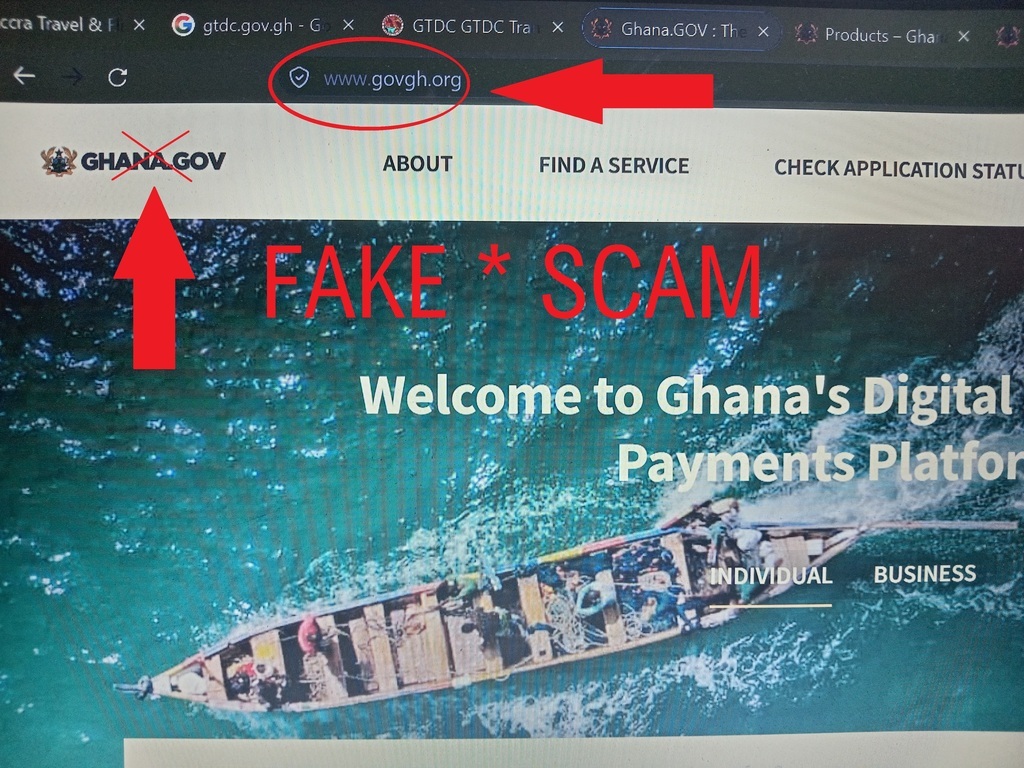
Ghana Without Filters · Digital safety · Fake Ghana government website: why are the authorities allowing this to continue?
A website presenting itself as Ghana's official government services portal is publicly accessible, uses the name and look of Ghana.GOV, and can be found by people searching for government services.
That raises serious questions about digital security, public responsibility and the protection of Ghanaian citizens, at home and in the diaspora. Something is fundamentally wrong when people searching online for official Ghanaian services can land on a site that calls itself the Government of Ghana's digital services platform but runs on an entirely different domain.
The website is govgh.org. The official portal is ghana.gov.gh.
Search our Network. Start here.
It looks like Ghana.GOV, but it is not
Open govgh.org and look around. You find the familiar language of a government portal, with categories for birth and death certificates, business registration, social services, driving and transport, and other public services. There are login and registration options and an official-sounding identity. The site even presents itself as the "Ghana Government Official Web Portal".
It looks like Ghana.GOV. But it is not the official government portal.
The genuine platform is ghana.gov.gh. It was launched in July 2021 as the single digital access and payment point for government services. That is where citizens pay, among others, the Passport Office, Ghana Immigration Service, Ghana Revenue Authority and Births and Deaths Registry.
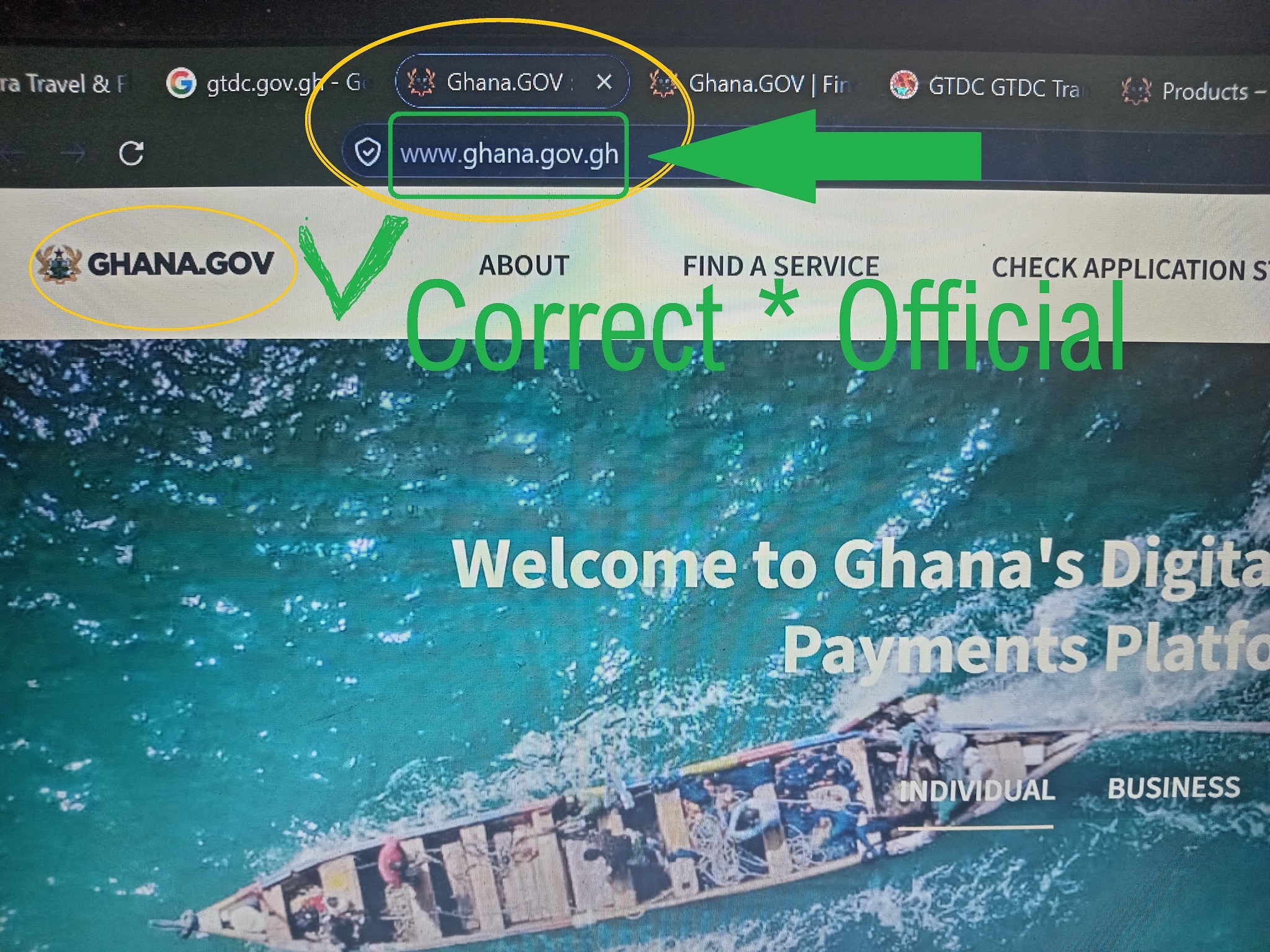
The lookalike govgh.org compared with the official ghana.gov.gh. The genuine platform is ghana.gov.gh. Screenshot © Ghana-Net.com
This is not a simple domain-name misunderstanding
The difference between the two addresses is not a minor technical detail:
- ghana.gov.gh is the official Ghana government digital services platform
- govgh.org is a separate website on an ordinary .org domain that anyone in the world can buy
The National Information Technology Agency (NITA) identifies Ghana.GOV as the official government digital services platform and directs visitors to ghana.gov.gh. Ghana's domain rules also reserve the .gov.gh namespace for government institutions. No private person can register a .gov.gh address.
That distinction matters, because government websites are not ordinary commercial websites. They represent the state. Citizens expect them to be authentic, secure and accountable. Yet govgh.org uses the same government identity, a similar presentation and overlapping service categories.
An experienced internet user may spot the difference. An elderly Ghanaian living abroad, someone returning home after twenty years, a first-time user of Ghana's online services, or a mother who just wants her child's birth certificate may not. That is precisely why impersonating a government deserves serious attention.
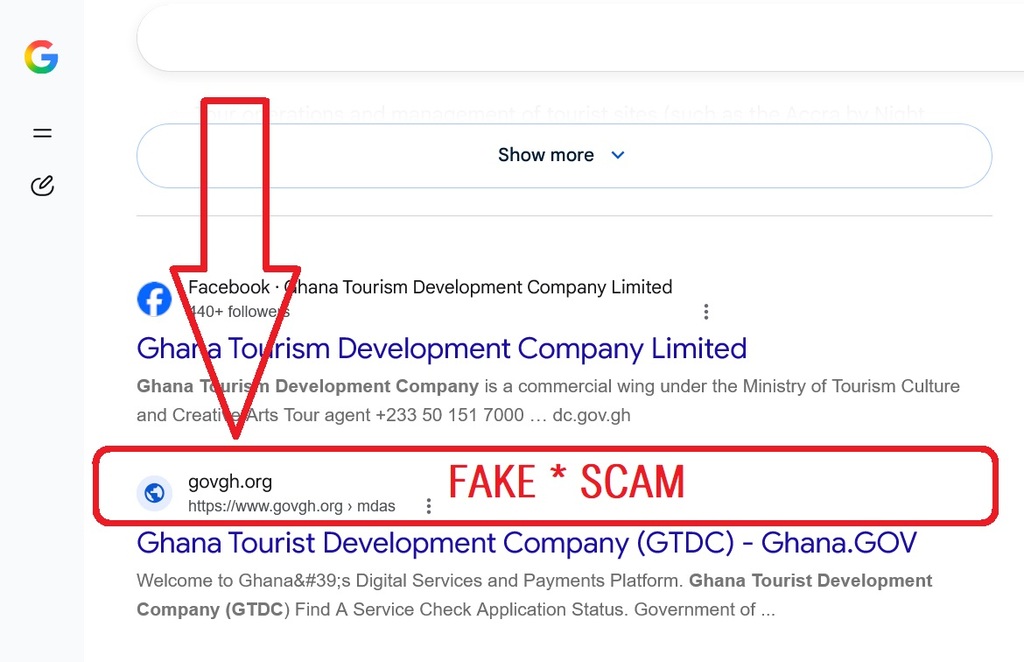
The lookalike government website as it appears in Google search results. Screenshot © Ghana-Net.com
Google: why should citizens have to guess?
People do not remember the exact address of every government department. They use Google, and they search for things like:
- Ghana government services online
- Ghana official government portal
- Ghana birth certificate application
- Ghana business registration online
- Ghana passport and immigration services
They expect the search engine to take them to the right place. But search engines do not check whether a website is authorised to represent a government. A site can use the right keywords, a convincing description and familiar branding without being an official institution.
Ghana's own Cyber Security Authority knows this pattern well. It has repeatedly warned that criminals use fake listings on Google Search and Google Maps to impersonate real businesses. In September 2026 it warned specifically that fraudsters clone the websites of legitimate government agencies to make offers look official, and that such cloned sites can be used for phishing or to harvest personal data.
This is not simply an SEO problem. It is a public protection problem.
Google has a responsibility to deal with deceptive results under its own policies. But the Ghanaian authorities also have tools to protect the state's digital identity. Why are there no prominent official warnings? Why is there no easy-to-find public notice naming the genuine portal and warning against unauthorised alternatives? And if action has already been taken, why has it not been communicated clearly to the public?
It is not the only one
While researching this update in November 2026, we came across another site, ghana-gov.pages.dev. It describes itself as "gov.gh", the "national government portal of the Republic of Ghana", maintained by the Office of the Head of Civil Service. Yet it is hosted on a free developer address, not on .gov.gh.
We have not established who runs it or whether it is an authorised prototype. That is exactly the point. Citizens should not have to investigate. If a site claiming to be the Government of Ghana does not end in .gov.gh, treat it as unverified until an official .gov.gh source confirms it.
Where is NITA? What is the Cyber Security Authority doing?
Two institutions should be at the centre of this.
The National Information Technology Agency (NITA)
NITA is responsible for Ghana's government digital infrastructure and the .gov.gh domain arrangements, and its own website names ghana.gov.gh as the official services platform. So:
- Has NITA formally investigated govgh.org?
- Has it contacted the domain registrar or the hosting provider?
- Has it assessed whether the site's branding could mislead the public into thinking they are dealing with the Government of Ghana?
- Has it issued a formal warning or sought appropriate action?
The Cyber Security Authority (CSA)
Ghana has a national cybersecurity framework, and the CSA regularly warns the public about online fraud, phishing, impersonation and fraudulent websites. It reports having shut down hundreds of fraudulent websites and impersonation accounts. So why should a website presenting itself as the official Ghana government portal not receive particularly close scrutiny?
We are not suggesting that nothing has happened behind the scenes. We are asking why citizens cannot easily find a clear public explanation of what has been investigated, and what protective measures have been taken, in this particular case. Silence creates uncertainty, and uncertainty is exactly what people exploiting trusted government identities benefit from.
The potential consequences are serious
Imagine a Ghanaian living in Germany, the United Kingdom, the United States or Canada who wants to arrange official documents before travelling home. They search online, find a site carrying the Ghana.GOV name and familiar service categories, and assume they have reached the right place. They may create an account, enter personal details, try to access a service or make a payment.
We cannot establish from the website's appearance alone that personal information has been stolen or that fraudulent payments have occurred. That would require evidence. But the potential risks are obvious. A convincing government lookalike can create opportunities for:
- collecting personal information
- phishing and account impersonation
- misleading payment requests
- identity theft
- fraud against citizens and members of the diaspora
- loss of trust in genuine Ghanaian digital services
The consequences reach beyond Ghana's borders. Ghana has a large international diaspora that depends on online information to arrange documents and registrations without travelling to Accra. Under the 2026 rules, even visitors must now apply online before they fly, through the official e-Visa and ETA portal. Our Ghana ETA and e-Visa guide explains how to avoid copycat visa sites too. People should not have to become cybersecurity experts just to find the real government website.
Ghana wants digital transformation. But who protects the digital state?
Ghana talks a great deal about digital transformation, modern public administration and better access to services. These are worthwhile goals. But digital government is not only about building websites and putting services online. It also means protecting the identity of those services.
A government portal is part of the national digital infrastructure. Its name, domain, branding and credibility must be protected. What is the point of investing in digital public services if citizens can be confused by sites posing as official platforms? And what message does this send to investors, returning diaspora members and ordinary citizens who are asked to trust Ghana's digital infrastructure?
This is not the first time. In July 2026 the official museums board site, gmmb.gov.gh, redirected visitors to gambling and adult content. We reported it in our security warning. And the country's official tourism platforms have problems of their own, described in The Sad Reality of VisitGhana.com.
Digital transformation without digital protection is incomplete.
What the authorities should do now
This deserves more than another general cybersecurity awareness message. The relevant authorities should take concrete, publicly verifiable steps.
1. NITA must clarify the situation
NITA should publicly confirm that govgh.org is not the official Ghana government services portal, and say whether it has investigated the site.
2. The Cyber Security Authority should assess the risks
The CSA should examine whether the site's presentation, registration process and services create risks of impersonation, phishing or exposure of personal data.
3. Fix the search visibility problem
The authorities should work with search engines so that the genuine portal is clearly identifiable when people search for Ghanaian public services, and should file formal reports under the platforms' impersonation policies where appropriate.
4. Investigate the domain and its operators
If the site uses government branding without authorisation, the responsible institutions should examine the legal and technical options available.
5. Inform citizens and the diaspora
A public warning should go out through official government channels, Ghana's embassies and high commissions abroad, and wherever people are most likely to meet the lookalike site.
One short, clear message would already make a difference:
The official Ghana government digital services portal is ghana.gov.gh. Other websites using the Ghana.GOV identity should not be assumed to be authorised government platforms.
Protect yourself: a two-second check
- Look at the full address in your browser. Official Ghana government sites end in .gov.gh.
- Type ghana.gov.gh yourself rather than clicking a search result or a link in a message.
- Never enter your Ghana Card number, passport details or payment data on a site you reached through an ad or a forwarded link.
- If something looks wrong, report it to the Cyber Security Authority.
- Read our checklist for identifying Ghana-based scams and the most dangerous online scams in Ghana.
We deserve answers, not another cybersecurity slogan
Ghanaian citizens deserve better. People living abroad deserve better. Anyone who trusts the Ghanaian government with personal documents and information deserves to know that the channels they use are genuine.
This is not an attack on digitalisation. Quite the opposite: Ghana needs trustworthy digital government services more than ever. But trust cannot simply be demanded. It has to be earned, and protected.
Our questions are straightforward:
- Has NITA investigated govgh.org?
- Has the Cyber Security Authority assessed the website?
- Has the government contacted the relevant domain and hosting providers?
- Has Google been formally notified about the potential impersonation?
- Are Ghanaian citizens and the diaspora being adequately protected?
These are reasonable questions, and they deserve public answers. Ghana cannot promote itself as a modern digital nation while leaving people to work out for themselves which websites claiming to represent their government can be trusted.
The official portal is ghana.gov.gh. Check the address before you submit personal information or make a payment. And to the responsible authorities: protecting Ghana's digital identity is not optional. It is part of your responsibility to the people of Ghana.
Ghana-Net – independent perspectives on Ghana, beyond the official narrative.
More from Ghana Without Filters
- The Sad Reality of VisitGhana.com
- Ministry of Tourism: Thank You for Bringing Ghana Travel Back Online
- The Ghana Guide That Sends You to Singapore: How to Spot an AI-Written Travel Book
- Your Next Trip to Ghana: $53.90 for 13 Days – Seriously?
- How to Prepare for Moving to Ghana: A Real Checklist
- Buying Property in Ghana: What Diaspora Buyers Are Not Told
- The Biggest Lies Influencers Tell About Ghana
- The Biggest Mistakes Returnees Make When Moving to Ghana
- Why Many Returnees Fail, and How to Avoid It
- The Emotional Reality of Returning Home
- The Hidden Costs of Living in Ghana
- Ghana Road Deaths: Eleven Billion Cedis Idle
- Who Sold Whom? Ghana's Slave History Without the Marketing
- A Few Words Go a Long Way: The Languages You Will Hear in Ghana
- Why You Don't Need Another Ghana Travel Book
- Why the African Diaspora Should Visit Ghana in 2027: Ghana at 70
On Ghana-Net.com
Sources and factual references: Official Ghana.GOV portal: ghana.gov.gh. Launch of Ghana.GOV in July 2021: Ghana News Agency and Graphic Online. National Information Technology Agency: nita.gov.gh, responsible for the .gov.gh domain. CSA warning on cloned government-agency websites, September 2026: Ghana News Agency. CSA alert on impersonation via Google Search and Maps: MyJoyOnline. Cyber Security Authority alerts: csa.gov.gh. The website examined: govgh.org (deliberately not linked). It is not the official Government of Ghana portal, so do not enter personal data or payments there.
Text and screenshots © Remo Kurka, Ghana-Net.com · Updated and fact-checked: 5 November 2026